
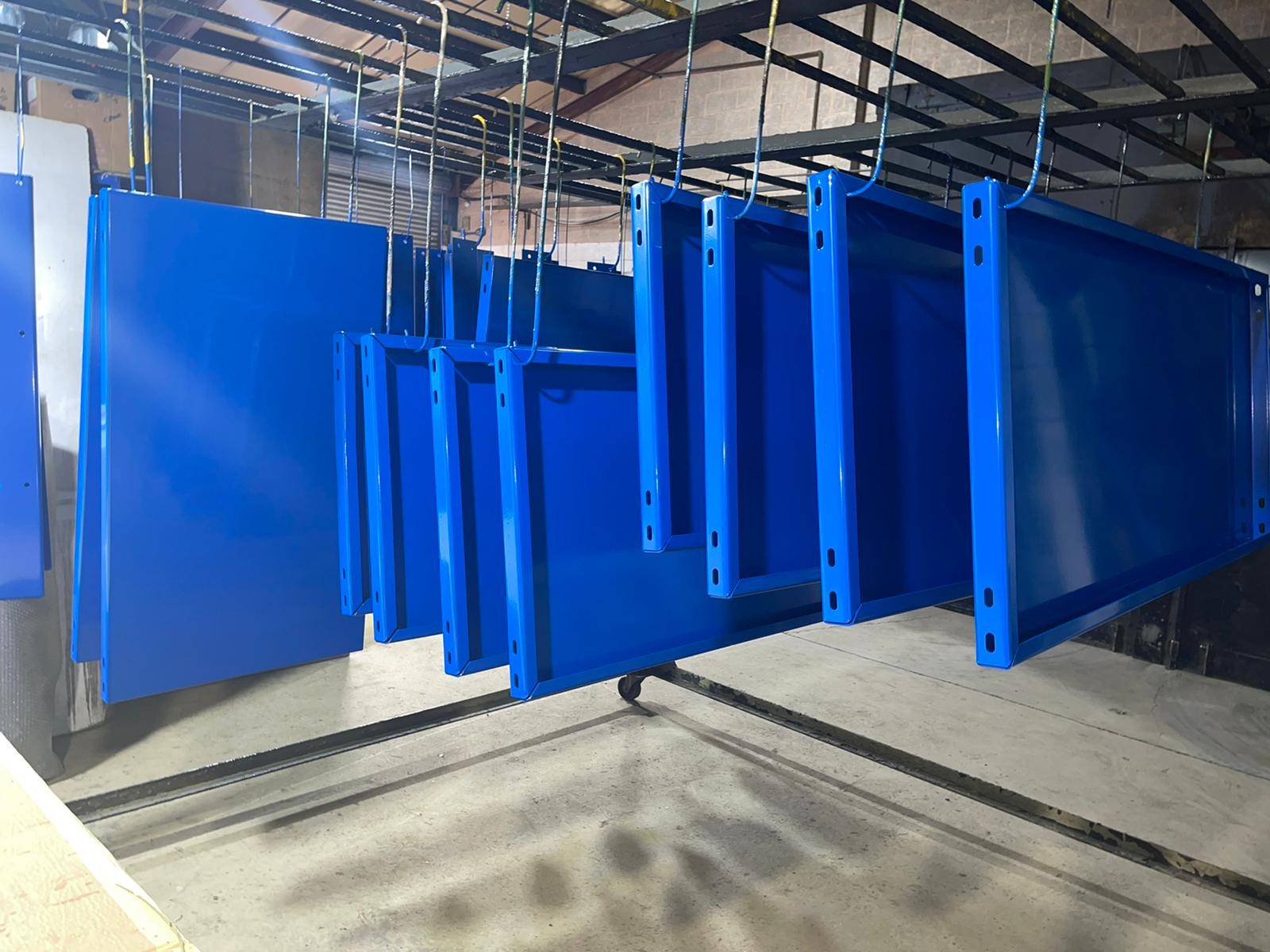
POWDER COATING
Powder coating represents a coating method where a dry, free-flowing powder is applied. In contrast to traditional liquid paint, which relies on a solvent that evaporates, powder coating is typically administered electrostatically and then cured using heat or ultraviolet light.


The powder used may be a thermoplastic or a thermoset polymer, commonly chosen to produce a durable finish surpassing the resilience of conventional paint. This coating technique finds primary application in metal coating, covering items such as household appliances, aluminium extrusions, drum hardware, automobiles, machine parts and bicycle frames.
Advantages of Powder Coating
Discover the unmatched advantages of powder coating – a perfect blend of aesthetics, durability, and environmental consciousness for your projects.
Pretreatment for Optimal Preparation
Powder coating begins with a meticulous pretreatment stage, ensuring surfaces are expertly prepared. This sets the foundation for optimal adherence and longevity of the coating.
Precision Masking for Intricate Detailing
The subsequent masking step adds precision to the process, allowing specific areas to be shielded from the coating. This opens up possibilities for intricate detailing in the final product.
Vibrant Lacquer in a Spectrum of Colours
Powder coating doesn’t just protect; it enhances aesthetics. The application of lacquer in various colours and finishes not only provides a visually appealing finish but also contributes to the durability of the coated item.
Versatility for Customisation
The versatile colour palette allows for customisation and differentiation in the final appearance, making powder coating a preferred choice for a wide range of applications.
Environmental Sustainability
Powder coating is an eco-friendly choice with a solvent-free formulation that minimises or eliminates volatile organic compounds (VOC), contributing to environmental sustainability.
Performance Excellence
Powder coating allows for a thicker application without the risk of running or sagging, ensuring consistent visual appeal across surfaces. Additionally, its remarkably fast curing time makes it an efficient and time-saving option in coating technologies.